
 Dq208U3ELWo7
Estimated reading time: 5 minutes
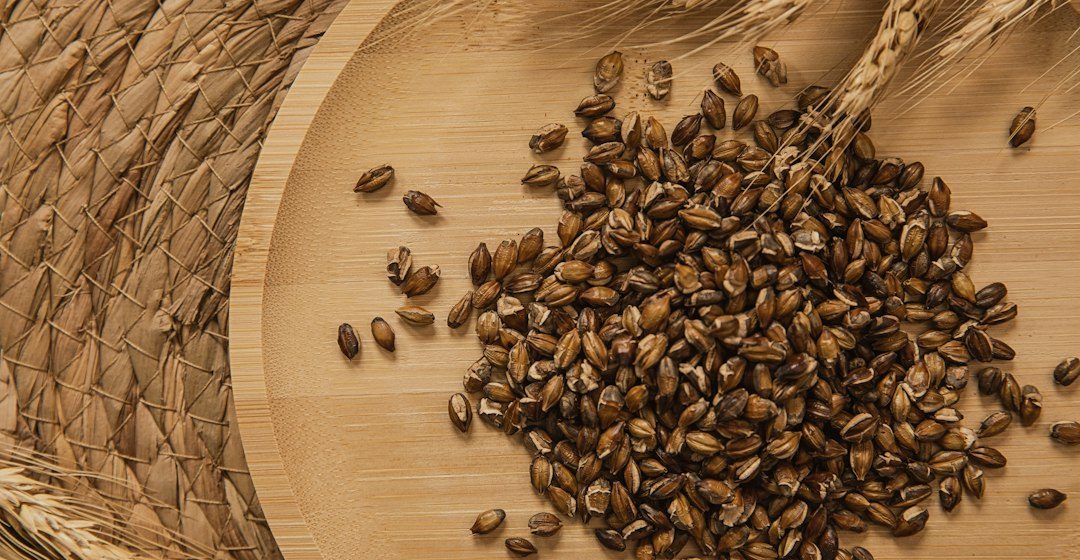
Barley remains the foundation of much of the world’s beer, but it is no longer the only ingredient getting serious attention from craft brewers. A research review published on 12 October 2026 examines how specialty malts, non-traditional cereals and pseudo-cereals can give breweries more ways to shape a beer’s flavour, body and production process.
The point is not that every brewer should replace barley. It is that a wider ingredient palette can help a brewery develop a recognisable house style, respond to local agricultural opportunities or create a beer with a different texture and aroma. The challenge is turning an interesting raw material into a dependable recipe.
Why brewers are looking beyond a single grain
Grain choice influences more than colour. It affects the sugars available for fermentation, the body left in the finished beer, the character of the malt and the way a mash behaves in the brewhouse. Specialty malts can bring toast, biscuit, caramel or roasted notes. Other cereals can change the protein, starch and fibre profile of the grist.
Wheat and rye are already familiar to many beer drinkers, while oats are often used to build a softer impression in certain styles. Research into less conventional cereals and pseudo-cereals broadens the conversation further. These ingredients can offer distinctive flavour possibilities, but they do not behave identically to malted barley and cannot always be substituted at the same rate.
The 2026 review by Aleksander Ivanov and Georgi Kostov looks across raw materials and several stages of production, including mashing, wort preparation, fermentation and hopping. Its central message is that ingredient innovation works best when it is supported by process control, not when a new grain is simply added for novelty.
The technical work begins in the mash
Brewers need to understand how a grain contributes starch and how that starch can be converted into fermentable sugars. Malted barley brings enzymes that help make this conversion possible. Some alternative ingredients may have lower enzyme activity or different starch characteristics, which can require a more carefully designed mash or a proportion of enzymatically active malt.
Water absorption and the structure of the grain bed matter too. Ingredients with more soluble fibre can affect viscosity and lautering, the stage where sweet wort is separated from the grain. A recipe that looks attractive on paper can become difficult to run if the mash drains slowly or produces inconsistent extraction.
That is why brewers often begin with small pilot batches. A modest change in the grist can be tested for extract, clarity, fermentation performance and sensory effect before it is scaled up. Keeping detailed records makes it easier to understand whether a change in the finished beer came from the grain itself, the mash schedule or another process variable.
Flavour is the opportunity, consistency is the test
Alternative grains can help a brewery build a distinctive flavour profile, but the goal is not to make every beer unusual. A subtle cereal note, a fuller mouthfeel or a different balance between malt sweetness and hop bitterness may be more useful than an ingredient that dominates the glass.
Consistency is especially important for breweries selling the same beer across multiple batches. Harvest conditions, storage and processing can all affect raw materials. A brewer may need to adjust the recipe or blending plan when a new lot behaves differently. Ingredient specifications and supplier relationships therefore become part of the creative process.
There can also be communication issues. A grain may be marketed as an alternative to barley, but that does not automatically mean the finished beer is suitable for someone avoiding gluten. Cross-contact and the full formulation matter, so breweries should make claims only when they have the appropriate testing and legal basis.
Innovation should include the whole production system
The review also considers sustainability and process advances. A new grain may offer a useful local supply option, but its environmental value depends on how it is grown, transported, processed and used. Brewers should compare the full picture rather than assume that an unfamiliar crop is automatically more sustainable.
For smaller breweries, the most practical route is usually incremental: test a limited percentage of a new ingredient, measure its effect on mash performance, then taste the beer with a clear sensory brief. That approach limits waste and creates evidence the brewing team can use for the next batch.
A broader toolkit, not a replacement for craft
Barley is likely to remain central to brewing, but it does not need to be the only source of ideas. Specialty malts and alternative grains give brewers more ways to build texture, aroma and identity, provided the recipe is engineered with care.
The most interesting result may not be a beer that loudly announces its unusual grain bill. It may be one where a small ingredient change creates a more balanced, memorable pint. For brewers, that is the real value of experimentation: a broader toolkit, paired with the discipline to make every batch dependable.
Research: Ivanov and Kostov, “Technological innovation in craft brewing” (12 October 2026).